Pleasant Things
A light rain shower falls while the sun still shines, and rainbows reflect in every droplet of water clinging to the leaves.
Receiving a genuine compliment.
Hot cocoa and clothes fresh from the dryer after you've been out in cold, wet weather.
The first blooming flower buds in spring.
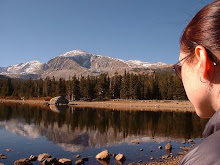
The sun shining on white mountains and frosted trees the morning after a snow.
You tell a joke and your audience laughs sincerely.
Your dog is overjoyed to see you when you get home.
You secretly admire someone from a distance, and they greet you with a smile -- the warm, happy feeling you get inside.
You give someone a gift, and they are genuinely pleased.
A hot shower after a long, hard day of work.
Waking up in the morning feeling refreshed instead of tired and weary.
The gentle rocking of a boat in small waves.
Waking up on a fine morning from a pleasant dream, and realizing you have no appointments to keep.
The satisfaction of a completed job well done.
Comforting words from a friend when you need comforting.
Rain after a dry spell.
You say something to make someone smile.
Discovering the solution to a difficult riddle after much thought and deliberation.
A bird singing in a snow-covered tree, to remind you that winter is not eternal.
The end of the workday on the last day of the week, heralding the start of the weekend.
A day off.
The feeling of elation after you win a contest.
A beautiful work of art.
The soft, contented purring of a cat when you scratch lightly behind its ears. It turns its head to press harder into your hand, enjoying the attention.
A cooling breeze, just enough to ruffle your hair, on a hot day.
The sun shining through a break in the clouds after a rainstorm.
The graceful air you feel when you put on elegant clothes.
You are expecting an unpleasant chore and learn that you don't need to do it after all.
The joyful tolling of church bells after a wedding.
Seeing loved ones or old friends that you haven't seen in a long time, and sharing fond memories.
--
Labels: everyday, ponderings
The Omnivore's Hundred
This list comes from the
Very Good Taste blog. As per
the given instructions, I have
bolded all the items I’ve eaten, and
crossed out any items that I would never consider eating.
1. Venison2. Nettle tea
3. Huevos rancheros4. Steak tartare
5. Crocodile
6. Black pudding -
I am repulsed by the very idea of this.7. Cheese fondue8. Carp
9. Borscht
10. Baba ghanoush11. Calamari12. Pho13. PB&J sandwich14. Aloo gobi15. Hot dog from a street cart16. Epoisses
17. Black truffle
18. Fruit wine made from something other than grapes -
Home-brewed mulled apple mead, courtesy of Matt.19. Steamed pork buns
20. Pistachio ice cream21. Heirloom tomatoes22. Fresh wild berries23. Foie gras
24. Rice and beans25. Brawn, or head cheese26. Raw Scotch Bonnet pepper -
I like my taste buds just the way they are, thanks.27. Dulce de leche
28. Oysters29. Baklava30. Bagna cauda
31. Wasabi peas32. Clam chowder in a sourdough bowl33. Salted lassi
34. Sauerkraut35. Root beer float36. Cognac with a fat cigar
37. Clotted cream tea
38. Vodka jelly/Jell-O
39. Gumbo40. Oxtail
41. Curried goat
42. Whole insects43. Phaal -
What's the point of eating something if your tongue is scorched after the first bite?44. Goat’s milk
45. Malt whisky from a bottle worth $120 or more
46. Fugu (pufferfish)
47. Chicken tikka masala48. Eel
49. Krispy Kreme original glazed doughnut50. Sea urchin
51. Prickly pear
52. Umeboshi
53. Abalone
54. Paneer
55. McDonald’s Big Mac Meal56. Spaetzle
57. Dirty gin martini
58. Beer above 8% ABV
59. Poutine
60. Carob chips61. S’mores62. Sweetbreads
63. Kaolin
64. Currywurst
65. Durian
66. Frogs’ legs
67. Beignets, churros, elephant ears or
funnel cake68. Haggis
69. Fried plantain70. Chitterlings, or andouillette -
I almost crossed this off, but 'never say never'... right?71. Gazpacho72.
Caviar and
blini -
I've had both, but not together73. Louche absinthe
74. Gjetost, or brunost
75. Roadkill -
It would have to be extremely fresh roadkill.76. Baijiu
77. Hostess Fruit Pie -
Food of the gods, seriously.78. Snail
79. Lapsang souchong
80. Bellini
81. Tom yum
82. Eggs Benedict83. Pocky84. Tasting menu at a 3-Michelin-star restaurant.
85. Kobe beef
86. Hare
87. Goulash88. Flowers89. Horse
90. Criollo chocolate
91. Spam92. Soft shell crab93. Rose harissa
94. Catfish95. Mole poblano96. Bagel and lox97. Lobster Thermidor
98. Polenta99. Jamaican Blue Mountain coffee
100. Snake
How much of an omnivore are you?
--
Labels: everyday, food, my future, ponderings
The future is now?
Reading
this article in a recent issue of
Technology Review, I had to stop and think that (a) some people have really been weirdly accurate in their visions of the future, and (b) we might be able to live under Their umbrella in blissful denial and/or ignorance, but Big Brother is here and They might be more powerful than we like to think. (And that, right there, is a frightening and thorny dissertation for some other time.)
Quoting MIT professor Robert Fano, 1970:
"Computers provide access to knowledge, and knowledge is power... Big Brother may well take the form of a computerized and centralized information system which has become essential to the operation of society. Thus, the societal exploitation of computers... may continue on the automation of existing functions in human organizations, with a concomitant centralization of information and control... [which] leads to the evolution of organizations into superhuman entities with their own goals, largely insensitive to human values."
Of course, the flip side of this argument is, as Fano explained, that "societal exploitation of computers" could take the opposite direction, toward "turning the power of computers to the service of the individual." His main point was a warning: "Unless computers are made truly accessible to the population at large, there will develop a dangerous power gap between those who have access to computers and those who have not, and particularly between organizations -- whether public or private -- and the private citizen."
I think it's important to recognize the current reality of both of Fano's visions for the future. With that in mind, it's also important to note that by the very nature of the Internet, and the resultant collaborative sharing (or not) of information -- privacy rights, for example, and how private your on-line information actually is -- our situation is still growing and changing as society adapts new technology to its own ends in various ways.
(
Full article: "Community Access," by Matt Mahoney >>)
--
Labels: everyday, ponderings, science
Road trip report: spring break at Grand Canyon
For spring break this year, I drove to the Grand Canyon and back with two sixteen-year-old girls (which meant that I did
all of the driving).

What was I thinking? I was thinking it might be fun. Well, it turns out I was right. I only thought about killing them once or twice; the rest of the time, we were all too busy taking pictures and laughing at each others' lame jokes. The photo highlights (and all of the hundreds of other pictures we took) can be found at
my Flickr site.
Our traveling roadshow:


 Day 1, Tuesday: Boulder, CO, to Blanding, UT (440 miles): via I-70 and US-191
We hit the road with a box full of canned goods (ravioli, green beans, corn, peaches, pineapple, etc.), plenty of bottled water, a huge music selection (ran the gamut from Kanye West to Madonna to Paul Oakenfold to AC/DC to the Backstreet Boys), and other assorted supplies (especially pretzels).
The first day was the biggest, mileage-wise; we hoofed it all the way out to Utah and then a good ways south, with room for sightseeing stops on the way. We stopped in Glenwood Canyon for a lovely picnic lunch of cold canned ravioli and green beans.

At a scenic rest area off I-70 in Utah, we took another break, took lots more pictures, and my gravity-defying little sister topped out on a picnic shelter and later somersaulted over a concrete retaining wall. (Actually, she says, she was attempting to vault it at a run, but her foot slipped, and she recovered by throwing her shoulder down and going into a roll. I wasn't paying very close attention, so from my perspective it looked cooler than that sounds.)

Farther down the road, just north of Moab, we drove through Arches National Park, which was gorgeous. That night, somewhere out on the open highway north of our destination, we stopped on the side of the road to look at the stars and debated over what was or wasn't the Big Dipper or Little Dipper.
Day 1 photos:
Hitting the roadEastern UtahArches National ParkDay 2, Wednesday: Blanding, UT, to Flagstaff, AZ (262 miles): via UT-95, UT-261, US-163, US-160, and US-89
We headed west from Blanding to Natural Bridges National Monument. The drive there was beautiful: blue sky, bright sun, rolling hills, towering roadcuts, surprising vistas. The park itself was chock full of picturesque sandstone. We drove the nine-mile loop road, stopped to look and take pictures at every overlook, did some meandering on foot.
Then we headed south for the Arizona border. We knew that we were coming up to a small section of road called Moki Dugway; the park ranger at Natural Bridges said it was a series of switchbacks, descending more than 1000 feet over 3 miles of road surface. Then we came to a pull-off, beyond which the road disappeared over a rise.

We stopped and walked out to the edge of a sandstone overlook, where I had a monumental "whooooaaaaaaa" moment as the view opened up in front of us. Far below, the highway zigzagged off into the distance across the wide country.

Moki Dugway, as we discovered when we finally got back in the car and continued down the road, is a narrow, side-winding gravel lane that twists back and back on itself to eke down the side of Cedar Mesa. I drove slowly, enjoying the view, and the girls screamed like it was an amusement park ride around every hairpin curve.

A little further down the highway, just north of Mexican Hat, Utah, we did some off-roading near Mexican Hat Rock. I was feeling adventurous, the girls were yelling encouragement in my ear, and I went for some of the more exciting tracks. My Subaru Forester handled it all with aplomb; I love my car.

North of the Utah-Arizona border, US-163 crosses Monument Pass; from a distance, this view struck me as particularly iconic of the great American Southwest.

Late in the afternoon we drove into Sunset Crater National Monument. It was pretty, but not terribly exciting or spectacular. We had fun clambering through a lava field.
Dinner was in Flagstaff, at a restaurant called Dara Thai that served up delicious and spicy Thai cuisine. Highly recommended!
Day 2 photos:
Southern Utah 1Natural Bridges National MonumentMoki DugwaySouthern Utah 2Sunset Crater National MonumentDay 3, Thursday: Flagstaff, AZ, to Kayenta, AZ (230 miles): via US-180, AZ-64, and US-160Once again, we were blessed with warm, sunny weather.

We cut northwest from Flagstaff through the mountains, which was a pretty drive, and then continued northward to Grand Canyon National Park.

We visited Mather Point and Yavapai Point, then did a picnic lunch in the parking lot at the park headquarters. From there we left the car for the shuttle buses, and rode up to Hermit's Rest, with a few stops at overlooks along the way.

We provided our own additional entertainment by engaging in bizarre arguments (how to best conduct and cover up a mob hit) and pointless ruminations ("if my leg muscles could speak, what would they say?"), as usual, at a volume certain to be overheard by other tourists.

Returning to the car, we drove eastward along Desert View Drive on our way out of the park, with plenty more scenic overlooks and lots of photos along the way. We made one more stop outside the park, at the Little Colorado Gorge, where we hiked in a little ways from the road and went venturing off the beaten path.
In Kayenta, the hotel desk clerk's dinner recommendation was a small local place called the Blue Coffee Pot. There, we discovered a nice family atmosphere and a down-home-style menu that featured Navajo dishes and other southwestern fare.
Day 3 photos:
Grand Canyon 1Grand Canyon 2Days 4-6, Friday-Sunday: Kayenta, AZ, to Gunnison, CO (317 miles), and Gunnison to Boulder (212 miles): via US-160, US-491, CO-145, CO-62, US-550, US-50, and US-285On Friday we headed for familiar territory. We pulled off the road at Four Corners, intending to stop and take a couple of pictures, but they wanted to charge us $3 admission per person, so we got right back on the road and kept going.

Lunch was another canned picnic, parked roadside amidst the snowbanks, somewhere in the mountains of southwest Colorado. Over the course of the afternoon we played in the snow, complained at other drivers riding their brakes downhill from the mountain passes, and ate lots of pretzels.

Towards evening, we made a little detour off US-50 west of Gunnison, up a little dirt track called Alpine Plateau Road No. 867. Thanks to the tire tracks worn into the mud and snowpack, and the hefty snowbanks to either side of the road, I had fun rumbling up and down the hills and sliding around turns. (No sarcasm, either -- I love my car!)
Friday night my parents rolled into Gunnison, a couple of hours after we did; on Saturday we went to the local climbing competition, which my little sister competed in and my dad helped run. We also hung out some with friends from the Colorado-New Mexico region who were in town for the same competition.
Sunday we drove home.


We pulled off at Kenosha Pass on US-285, and went hiking a little ways into the woods up another mud road. Then, while my parents wandered around the parking area with the dog, I took the girls in the Subaru for a spin up the same mud road. My car came back muddy;

I was duly pleased. We did lunch at Coney Island, a hot-dog-shaped hot dog stand tucked away among the evergreens just off US-285 east of Bailey, Colorado.
Days 4-6 photos:
Driving homeStatistics:1461 highway miles
742 photos/videos
4 states (US-160 actually cuts through New Mexico for about a mile)
4 national parks/monuments
--
Labels: everyday, food, travel
ABO blood types
Here's a (relatively) simple explanation.
The four basic types are A, B, AB, and O. These types are determined by which certain antigens, or protein markers, are found on a person's blood cells. A person can have 'A' antigens only, 'B' antigens only, both 'A' and 'B' antigens, or none.
Which (if any) of these antigens a person has is determined by genetics. In a person's genetic code, the gene pair that determines these antigens can be any combination of 'A', 'B', and 'O', making for six possible genetic sequences: 'AA', 'AO', 'AB', 'BB', 'BO', and 'OO'. The genes for 'A' and 'B' are codominant, and 'O' is recessive. This means that if a person's genes code for 'AA' or 'AO' their blood cells will carry 'A' antigens (this is blood type A), 'BB' or 'BO' will yield 'B' antigens (type B), 'AB' will cause both 'A' and 'B' antigens to be produced (type AB), and 'OO' will produce no antigens (type O).
Now for the important part: anti-A and anti-B antibodies. (Antibodies are one of the human body's defensive mechanisms.)
A person with type AB blood carries both 'A' and 'B' antigens, so neither type of antibody is produced. This is what makes type AB the "universal receiver"; because it has no anti-A or anti-B antibodies, it can accept any blood type.
Type A blood carries only 'A' antigens, so in this case only anti-B antibodies are produced, which will attack only cells with 'B' antigens; vice versa, for type B with 'B' antigens, only anti-A antibodies are produced.
Type O blood carries neither 'A' nor 'B' antigen markers, so both anti-A and anti-B antibodies are produced; if these antibodies encounter any blood cells that carry 'A' or 'B' markers, they will recognize those cells as foreign and attack them. For this reason, a person with type O blood cannot accept any other blood type; each of the other types (A, B, and AB) carries 'A' and/or 'B' antigen markers. However, for this same reason, type O is the "universal donor"; these blood cells, because they carry no 'A' or 'B' antigens, can safely mingle with any other blood type.
Those are the basics of ABO blood types in a nutshell. (Bonfils gave me a complimentary keychain; I might as well know about what goes on with the blood that I've been giving away.)
The good news is that my blood type (AB+) can accept every other known blood type. The less-than-great news is that my blood cells are only acceptable to other people with the same exact type, or only about 3.4 percent of the population.
Anyone, however, can use my blood plasma, because it contains none of the blood cells (with their pesky antigens and Rh factors) that cause the incompatibility.
This warrants some thoughtful consideration.
The process by which they (the nebulous conglomerate of licensed phlebotomists) collect plasma is called plasmapheresis. This involves several iterations of a cycle in which blood is collected and separated into its components in a centrifuge, the plasma is drawn off, and the remaining components are fed back into your bloodstream. The entire process (including paperwork, donation, and prescribed downtime) takes about an hour and a half, and most donation centers offer to "compensate" plasma donors for their time.
Plasma is a fairly versatile blood product. According to several informational websites, a bone marrow or organ transplant surgery requires over a hundred units of plasma. Plasma also contains proteins that are used to treat immunodeficiency and blood coagulation disorders (such as hemophilia); for these same reasons, it is also a sought-after material for biomedical research purposes.
--
Labels: everyday, science
Wanderlust
I've got it bad. I have always romanticized the adventure of traveling: cruising down the open highway, rolling across the country over railroad tracks, making a brand new journey. Perhaps this is part of the reason that I prefer not to travel by jetliner; on the road or on a train, you get a real sense that you're actually traveling. I love looking out the window and discovering a new panorama at every moment. I want to freeze every one of those moments and remember it, treasure it, because who knows when I might pass this way again; for each moment I have experienced, every place I've ever been, one thing remains true: I came, I saw, I moved on. And while it's nice to slow down, maybe even stop for a while and really experience a place, I want to keep moving, because there's something new another mile down the road, around the next bend.
Every single time I cross a set of railroad tracks, see a train, hear a train engine's horn, I want to follow those tracks, I want to catch that train and see where it takes me. Interstate highways are a perpetual temptation; I usually manage to curb the impulse, and I pull off at my planned exit and go wherever it was that I meant to go, but I always think,
What if I just kept going? San Francisco, here I come. Or Cheyenne, or Chicago, or Albuquerque, or whatever else may lie ahead.

The open road: the steady hum of the engine, the rhythmic rumble of pavement under the wheels, milemarkers ticking away the distance, an endless stream of asphalt stretching ahead and behind, land spread out wide all around. Every now and then I find that I have come unexpectedly into a moment that is almost a kind of nirvana; in those moments of near-perfection, I could just keep following that road, going onward forever.
--
Labels: everyday, imagine yourself here, ponderings, travel
"Whiplash" injuries: a car safety lecture
Today we're going to learn about one of our friendly vehicle safety features, the "head restraint" (apparently, it is not properly referred to as a "head rest"), how it can save us from nasty "whiplash"-type neck injuries, and how to properly adjust it so that it will be more effective in the event of a crash.

In a rear-impact car crash, as the vehicle is effectively given a shove forward, a poorly protected occupant will undergo three primary phases of movement, as illustrated in the three-part diagram above [IIHS, 1997]. Initially, the torso is forced against the seatback and is pushed forward; the head, prior to contacting the head restraint, initially remains level and lags behind the torso. This results in a characteristic "S"-shape of the neck, where the upper portion of the neck is in flexion while the lower part is in extension (above, left). Following the "S-phase" is the extension phase, in which poor head support will allow the neck to transition into full extension (above, center). Here the torso may "ramp" up the seatback, causing the head restraint to provide even less head support. The forces on the head then accelerate it to catch up with and pass the torso, giving rise to the full flexion or "rebound" phase (above, right). So-called "whiplash" injuries may occur in one or more of these phases. In general, it is thought that the risk of whiplash injuries may be reduced or even completely eliminated if we can minimize relative motion between the head and torso. Controlling this relative motion involves various safety features, but head restraint geometry is especially important to reducing the risk of whiplash injuries in rear-impact crashes.

The two common measurements of head restraint geometry are vertical offset and horizontal backset. Vertical offset is commonly measured as the distance of the head’s center of gravity above the top of the head restraint; in U.S. federal safety regulations, this measurement is replaced by that of height above the so-called "seating reference point" (SRP). Horizontal backset is measured as the horizontal distance between the back of the head and the head restraint. The Insurance Institute for Highway Safety (IIHS) and the Research Council for Automobile Repair (RCAR) commonly define these as shown in the diagrams above [RCAR, 2001]. Studies over the last four decades have generally agreed that whiplash will be reduced if the head restraint is positioned sufficiently high and close behind the head. Independently from federal regulation, IIHS evaluates head restraints according to guidelines set by RCAR. IIHS recommended that head restraints have a vertical offset of less than 90 mm (3.5 inches), so as to make the top of the head restraint at least level with the head’s center of gravity, and a backset of less than 100 mm (4 inches) [IIHS, 1997].
As of January 1, 1969, Federal Motor Vehicle Safety Standard (FMVSS) No. 202 required that all passenger cars manufactured for U.S. sale must have a head restraint in the front outboard seating positions that could achieve a specified height above the SRP, providing adequate protection for a 50th-percentile male [Kahane, 1982]. This standard has not changed since then. According to IIHS, the standard is weak; two major deficiencies are the lack of a minimum height requirement for head restraints in the down position, and the lack of a backset requirement. FMVSS 202 states only that head restraints must achieve a certain minimum height above the SRP when in the fully-extended position; when adjustable head restraints meeting this requirement are left in the down position, the occupant will be inadequately protected. In addition, the required height is only minimally protective. An IIHS evaluation of 1997 model year cars rated over 50% as having poor head restraint geometry, and less than 3% were rated "good" [IIHS, 1997].
To address the deficiencies, the National Highway Traffic Safety Administration (NHTSA) has revised FMVSS 202 in recent years [NHTSA, 2000]. Effective Sept. 1, 2009, head restraints must achieve a new, greater height above the SRP and lock in this position, with a specified minimum lowest height; the head restraint's backset must also fall within a specified range in any adjustment position. According to NHTSA, the new front outboard standards will provide adequate protection for 99.7% of the male population and all females, where "adequate protection" is defined as the head restraint reaching at least as high as the head’s center of gravity.
IIHS and RCAR support these revisions, but nonetheless there is still concern that the revised standards are not what they should be [IIHS, 2001]. RCAR recommended, and IIHS has adopted, stricter testing standards consisting of both geometric and dynamic tests [RCAR, 2006]. By these standards, an IIHS evaluation of 2004 model year cars rated 80% as having "good" or "acceptable" head restraint geometry; however, once seats passing this static geometry test were subjected to RCAR dynamic tests, ratings dropped significantly. By the combined static and dynamic testing standards, only about 33% (24 out of 73) passed with a rating of "good" or "acceptable." Including the 24 car seats that did not pass the static test, a total of about 56% (54 out of 97) were rated "poor" [IIHS, 2004].
With the average level of current technology, it's important to promote education among vehicle drivers and occupants alike. Most occupants don't properly position their adjustable head restraints; in many cases this may be due to mere ignorance and/or indifference, but it is likely that many other people leave their head restraints down for reasons of comfort. Ford Motor Company, for example, reported a recent increase in customer complaints pertaining to head restraint comfort; it is believed that these complaints correlate with reduced backsets in head restraints [NHTSA, 2004].
Next time you hop in the car, check your head restraint. The first time I did so, I was dismayed to realize that mine was positioned far too low to provide any real protection against rear-impact whiplash injuries. Now, however, it's adjusted as it should be. Remember: horizontal backset within 4 inches, and vertical offset within 3.5 inches, or such that the top of the head restraint is at least level with your head’s center of gravity. If you fail to comply with these recommendations, I will feel free to call you stupid.
References and further reading:
>> IIHS (1997):
"Special Issue: Head Restraints" [PDF, 575 KB],
Status Report Vol.32, No.4.
>> RCAR (2001):
"A Procedure for Evaluating Motor Vehicle Head Restraints" [PDF, 471 KB].
>> C.J. Kahane, NHTSA (1982):
"An Evaluation of Head Restraints.">> NHTSA (2000):
FMVSS 202: Head Restraints, Code of Federal Regulations, Title 49, Part 571.202.
>> NHTSA (2004):
"Final Regulatory Impact Analysis, FMVSS No. 202 Head Restraints for Passenger Vehicles" [PDF, 4.3 MB].
>> IIHS (2001):
"New head restraint rule would prevent many whiplash injuries, but proposed dynamic tests could compromise safety" [PDF, 230 KB],
Status Report Vol.36, No.4.
>> RCAR (2006):
"RCAR-IIWPG Seat/Head Restraint Evaluation Protocol" [PDF, 3.2 MB].
>> IIHS (2004):
"Special issue: protection against neck injury in rear crashes" [PDF, 504 KB],
Status Report Vol.39, No.10.
--
Labels: engineering, everyday, travel
Go Montana!
This kind of thing gives me hope that my constitutional rights are still relevant.
From the
Washington Post (full article >>):
"Montana officials are warning that if the Supreme Court rules in the D.C. gun ban case that the right to keep and bear arms protects only state-run militias like the National Guard, then the federal government will have breached Montana's statehood contract.
"Nobody is raising flags for the Republic of Montana, but nobody is kidding, either."If it comes to a Republic of Montana vs. a Big Brother kind of America, well, I know which side of the border I'll choose. I'd rather not leave my personal safety and that of my family in the hands of someone else, especially in light of the legal implication that
the police are not obligated to protect the citizenry. Also, I can't afford to hire a personal bodyguard.
--
Labels: everyday, my future, ponderings
The Great Mouse Jihad
My mother has declared holy war on the mice in our garage. I think it really became an issue when she discovered droppings on the shelf where she keeps her special gluten-free beer. The beer was fine after she washed the bottles a few times, but since then she's been a little crazy about it. I think she's taking it personally. Every time I see her, she says "I REALLY HATE THESE MICE!!!" and I'm at the point where my stock response is, "Yes, Mom, we know, thank you."
--
Labels: everyday
I went to Salt Lake City and all I got was...
- Dry, irritated eyes and nasal membranes (really, their air quality isn't great)
- Bigger sleep deficit (Discovery Channel in the hotel, and not sleeping in my own bed)
- Up-front, standing-room-only view of Chris Sharma's awesome whipper off the top crux move of the USA Climbing men's national final route
- Bad case of nerves from seeing a bunch of tractor-trailers and RVs blown sideways off of I-80 by strong cross-winds in Wyoming
- A new perspective on pantry management
It's really the last item that I'm here to talk about. When we were in town in late January, the local supermarket chain Macey's was having their annual "Family Preparedness Sale." They were advertising great sale prices on gallon-deep cans, five-gallon buckets, and ten-pound (and larger) sacks of freeze-dried blueberries, dried beans, rolled oats, cracked wheat berries, instant milk powder, powdered eggs, and myriad other items, pretty much all you could hope for.
I don't have anything against Mormons personally; I'm not going to tell anyone what they should or shouldn't believe. However, there are two things I really admire about the whole Mormon culture: this preparedness thing (if the apocalypse ever comes, the world will be rebuilt afterward by Mormons, and by fortified back-country mountain folk and the paranoid freaks who have fully-stocked fallout shelters in their back yards), and their work ethic. There's a lot to be said for a serious work ethic, too.
--
Labels: everyday, food, philosophy, ponderings, travel
Salary Theorem: The less you know, the more you make
I don't remember where I found this, but it makes perfect sense. Proof:
Given:
(1) Knowledge is Power.
(2) Time is Money.
(3) Power = Work / Time (as every engineer knows).
Let's do the math. We can combine (1), (2), and (3) as follows:
Knowledge = Power = Work / Time = Work / (Money). Therefore,
(4) Knowledge = Work / Money.
Solving (4) for Money, we get
(5) Money = Work / Knowledge.
Thus, as Knowledge approaches zero, Money approaches infinity, regardless of Work.
--
Labels: engineering, everyday, philosophy, science
Restless night
I got very little restful sleep last night. When I first went to bed, the house was still pretty warm, so I tossed and turned for a while before I got comfortable enough to nod off. Then I dreamed a lot. And then, shortly before 3:30 in the morning, I woke up abruptly hearing a momentary burst of noise; it sounded like loud voices over a radio.
Normally I would have brushed this off as the vestiges of a dream, but this time my dog jumped up with me. I don't know if she was just responding to me sitting up so suddenly, or if we both heard the same thing.
But at that point I couldn't just brush it off, and I had been soundly jolted out of sleep, so I grabbed a big flashlight and did a tour of the house, double-checking the screens on the open windows upstairs, the window latches on the closed windows in the rest of the house, and the locks on every door. My dog, after her initial start when I almost fell out of bed, was relaxed. She probably thought I was crazy, wandering around the house in the middle of the night. If anyone else saw the lights going on and off in different rooms, I'm not sure what they thought.
After that I went back to bed, and the dog settled down again on the floor next to my bed, but I lay awake for a long time and just listened to the night until I eventually fell asleep.
--
Labels: everyday, imagine yourself here
The Alygator Show
Have you ever had the feeling that you're on TV and no one told you? I have this feeling frequently. Sometimes I'm half-convinced that my life is a strange reality show; at these times I think it's more fun to suspect and speculate than to know for sure.
Once in a while, when I'm home by myself, I might think of something amusing and start laughing for no apparent reason. (Really, I crack myself up sometimes.) Then I'll have that "I have an audience" feeling, and I feel obliged to explain, out loud, to anyone who may or may not be listening, what was so funny.
Yeah, I know I'm crazy.
--
Labels: everyday, ponderings
The Minion
Last week Emily saw, was intrigued by, and purchased a
Venus' fly trap. She refers to it as her Minion. Her stated logic for this is that the Minion kills things for her. (When my dad was introduced to the Minion, he just made a comment about mini-onions.) Emily makes me laugh.
The other day I found a tiny spider in the living room and announced it to the household at large. Normally this would provoke Emily into escaping the room with high-pitched shrieks; this time, I suppose, she felt safe as she was, checking her e-mail on the computer across the room with the Minion perched on the desk next to the screen.
We decided it would be a good idea to feed the spider to the Minion.
Emily made me catch the spider in a piece of tissue and shake it into the Minion's container. (It came in this container, clear plastic with a lid, with the explanation that these plants prefer high humidity.) We all then watched the spider scurry around the Minion's container for a few minutes before Emily got frustrated.
She picked up the container, turned it up-side down, and shook it vigorously, screaming, "Earthquake!!!"
When the earthquake was over, we found the spider clinging to the Minion, just below one of its traps. The spider tested the footing ahead, thought better of it, and retreated back to the sides of the container.
Emily yelled at the spider for being stupid, informed it that it was now going to die a painful death in retaliation for its non-cooperation, and expressed her disappointment to the Minion at its own lack of aggression.
I got bored shortly thereafter and went upstairs.
A short time later, Emily ran upstairs after me, shrieking in maniacal sing-song, "It ate it! It ate it!"
I expressed interest, and examined the Minion to see the closed trap while Emily stroked the Minion's container, telling it, "Good Minion, I'm so proud of you!"
We have also discovered, in a separate incident (which still makes me laugh when I think about Emily's startled reaction), that the Minion will bite anything when provoked. Emily was testing its reflexes with her finger. Once she got over her surprise, she was extremely pleased with the Minion's reaction time.
--
Labels: everyday
Flirting: just add vodka
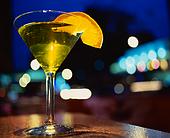
Last night I was at a piano bar called
The Reef in downtown Boulder with a friend of mine. She was drinking vodka martinis because she enjoys them; I was drinking cranberry juice on ice because there were car keys in my pocket.
Around 1:15 a.m., two inebriated (but polite) young men from a few tables over came to sit with us. One of them, College Guy #1, swore he recognized me from his business classes at the university, I promised him that I had never taken a business class in my life, he proceeded to apologize (repeatedly) for making an idiot out of himself, and I reassured him (repeatedly) that it was a mistake easily made and just as easily forgiven. His friend, College Guy #2, struck up a conversation with my friend, bought her another vodka martini, and compared his friend to "
that guy, you know, the one who says something stupid no matter what," after which my friend joined me in attempting to reassure College Guy #1 that he was not, in fact, "that guy."
You should understand that the entire interaction consisted of near-shouting to be heard over the (admittedly thunderous, but very good) piano-playing happening on stage, and I could hear maybe half of the words exchanged, my own included. This resulted in rather disjointed conversations and a frequent occurence of the universal "Huh?"
After a little while, during which College Guy #2 talked my friend (repeatedly) into taking "just one sip" of his alcohol-and-coke beverage ("it's really good, I promise") and College Guy #1 consoled himself in flirting with an equally-inebriated (and very appreciative) young woman at another table, my friend collected the phone number of College Guy #2 and we left.
We had a good laugh about the whole thing in the car on the way home.
That is the first time that a complete stranger has ever so much as attempted to flirt with me, regardless of the outcome. There is a little voice in my head complaining that he was just drunk; still, it was rather flattering, and I am inordinately pleased about it.
--
Labels: everyday, ponderings
Meteorological mood swings
Yesterday, average local temperatures were in the low 80's. This morning it snowed. I know it has to do with the mountains and the strange convergences of northern and Pacific fronts that we get over Colorado, but for crying out loud, for once I'd like to be able to reliably plan my wardrobe for a week in advance.
On the plus side... We have a saying around here: If you don't like the weather, wait a few days.
It's rough on the garden, though. The Japanese maple tree in our front yard gets hammered in the springtime.
--
Labels: everyday
Senoritis, or something completely different
I have too much work to do for the time I have in which to do it. I am two weeks away from the end of my senior year, and I still have another summer and fall semester to get through before I graduate. Most of my friends are preparing for life after college.
I should be tearing my hair out by the roots in despair. I should be climbing the walls of the engineering center, desperate to escape.
And yet, I am at peace with my current situation. I have reached a state of a kind of zen. I am content to hole myself up in the lab every day for hours at a time, slogging away at my enormous to-do list of project objectives and homework assignments. Sometimes I forget to eat lunch until my stomach starts making angry noises around 4 p.m., and my reaction to this is a mildly surprised "Huh, it's later than I thought," a trip to my locker for a snack bar, and a return to my lab station to work for another several hours. I end up back at the lab most weekends. I go to bed every night by 10, wake up every morning by 6, and have learned to like Quaker Peaches & Cream instant oatmeal and a cup of coffee with milk and sugar in the mornings.
Matt, who complains that I don't drink "real" coffee (namely, black), grudgingly admits that at least I've pared it down to this from my old habit of drinking exclusively "fake coffee-flavored beverages" (as Matt referred to them).
I'm even still interested in most of my classes.
It's going to be a good year.
--
Labels: everyday, ponderings
Four / Twenty
How did this become an event? It's something over which we roll our eyes, here in the People's Republic of Boulder. Every year at 4:20 p.m. on April 20th, a crowd gathers at Farrand Field on the university campus to light up and enjoy their marijuana.
Supposedly it's a rally in favor of legalizing posession of small amounts of pot. There's a Denver-based group who call themselves "
SAFER" (Safer Alternative For Enjoyable Recreation) advocating recreational marijuana use instead of alcohol. CU students passed a referendum last year "encouraging" the university administration to reduce marijuana use/posession penalties to the same as those for alcohol. Also last year, Denver voters passed an initiative to make marijuana legal for private adult use.
And they say Colorado's a conservative state. Pfft.
This year the local police put up barricades around Farrand Field and announced it was closed, warning that trespassers would be fined.
I'm doubtful that these measures will have proved to be effective deterrents. This is Boulder, after all.
--
Labels: everyday
Being and becoming
Sometimes I wonder about the experience of blindness. It is not something easily imagined; I can close my eyes and wander around my house, counting steps up to the second floor, trailing my hand along the wall to my door at the end of the hallway, tapping my fingers on the edge of my bed and then letting go, stepping out across the carpet, trusting that I didn't leave my shoes in the middle of the floor, reaching until my hand meets the edge of my dresser: and then there's a slight feeling of relief at having completed my journey without bruising my shins along the way.
Even when I do this, as I move through the house with my eyes closed I am picturing the walls and furniture around me, drawing on my visual map of the rooms for navigation. My mind's eye pictures my desk where I left it this morning, and lo, my hands find it exactly where I imagine it to be.
I do this sometimes in the morning; I fix myself a cup of coffee and, if I'm feeling brave, close my eyes while I'm still in the kitchen. Holding my coffee cup carefully in one hand, up at the level of my chin so as to not accidentally knock it against an out-of-place chair, I feel my way out to the foyer with my free hand, find the doorknob and pull the door open, step down onto the porch, and close the door; then I edge forward, feeling with my feet for the edge of the porch, and carefully step down, and sit gingerly on the edge of the porch, every movement controlled and slow so I won't lose my balance if one element in my surroundings is not exactly where I think it is.
And still I can picture the journey, though the chairs around the kitchen table provide some excitement, because I'm never sure where they are. I run into them frequently. Sitting on the porch, I can picture the front yard and the houses nearby; I picture cars on the street where they are habitually parked.
All this, the things I picture because I have seen them before, they fall into place as in the world of "being": this is the way I imagine things to be. I take it on faith that Colorado has not cracked in half, that there is not, in fact, a new Grand Canyon in place of the houses across the street. Immediately, I am only aware of the elements in my environment that I come into direct contact with: my coffee cup, the kitchen chairs, the front door, the porch, and the tiny square of sidewalk on which my feet are resting.
I can't be sure that the trees in the yard are actually there until I hear leaves rustling in a breeze; this enters into the world that is "becoming," the world of action and movement. I hear a car driving down the street, tracking it from left to right as it passes the house. The front door opens behind me; someone steps onto the porch.
"What are you doing out here?" I recognize my mother's voice.
It's a good question. I'm enjoying my coffee; I'm paying attention to the feel of sunlight on my skin; I'm imagining what I might see if I weren't temporarily blind.
When I open my eyes, I see one of our neighbors across the street, weeding a flower bed. I can't hear her over there; until now, she didn't exist in the world as I was aware of it. Only now does she enter into the picture.
There are other things I missed, too, because they weren't "becoming" in any tangible way.
--
Labels: everyday, imagine yourself here
Has anyone seen my brain?
... because it seems to have sprouted wings and taken off sometime in the last 30 minutes.
It can't have gotten far, right? How fast do brains fly? And what is the coefficient of lift for brain wings? What is a brain's lift-over-drag ratio? What kind of turbulent flow results from brain aerodynamics?
I can't answer these questions; I don't even know if my brain decided to wear a safety helmet.
I was doing fine up until a little while ago. I've been holed up in the lab all afternoon, so about fifteen minutes ago I took a walk upstairs to my professor's office (the one my subconscious believes is partly mechatronic) to pick up my old homework. And when I got back and sat down at my lab station, I couldn't do any more work. I think the crafty old brain took the opportunity to escape out a window upstairs when I wasn't paying attention.
I sure hope it comes back before class tomorrow.
--
Labels: engineering, everyday