Around the world with a shoebox
I don't remember where I found this prompt, but it struck me as an interesting question: "If you were given a free plane ticket around the world and a single shoebox for luggage, what would you pack?"
The shrewd, calculating side of my brain immediately responded, "Define 'luggage.' If the shoebox is my 'carry-on,' do I get a 'personal item' like a purse or a backpack as well?"
If the answer to that question were to be "yes," well, that really kind of takes all the fun out of it. For the sake of discussion, then, let's say that anything I take with me (barring the clothes on my back) must fit in this shoebox. Obviously, I can't bring everything I would need; I would be able to purchase and discard most things along the way. So what would I wish to have on this trip that is (a) small enough to fit in a shoebox, and (b) expensive and/or difficult to obtain?
After some thought, I think that my shoebox "priority" items would be the following:
Passport
Wallet (including the usual ID, credit cards, etc.)
Cash
Contact lenses and/or glasses
Digital camera (with an extra memory card)
Extra space might go to my
Neti pot, and a couple of extra pairs of clean underwear and socks.
I'm ready to see the world!
--
Labels: imagine yourself here, ponderings, travel
Road trip report: spring break at Grand Canyon
For spring break this year, I drove to the Grand Canyon and back with two sixteen-year-old girls (which meant that I did
all of the driving).

What was I thinking? I was thinking it might be fun. Well, it turns out I was right. I only thought about killing them once or twice; the rest of the time, we were all too busy taking pictures and laughing at each others' lame jokes. The photo highlights (and all of the hundreds of other pictures we took) can be found at
my Flickr site.
Our traveling roadshow:


 Day 1, Tuesday: Boulder, CO, to Blanding, UT (440 miles): via I-70 and US-191
We hit the road with a box full of canned goods (ravioli, green beans, corn, peaches, pineapple, etc.), plenty of bottled water, a huge music selection (ran the gamut from Kanye West to Madonna to Paul Oakenfold to AC/DC to the Backstreet Boys), and other assorted supplies (especially pretzels).
The first day was the biggest, mileage-wise; we hoofed it all the way out to Utah and then a good ways south, with room for sightseeing stops on the way. We stopped in Glenwood Canyon for a lovely picnic lunch of cold canned ravioli and green beans.

At a scenic rest area off I-70 in Utah, we took another break, took lots more pictures, and my gravity-defying little sister topped out on a picnic shelter and later somersaulted over a concrete retaining wall. (Actually, she says, she was attempting to vault it at a run, but her foot slipped, and she recovered by throwing her shoulder down and going into a roll. I wasn't paying very close attention, so from my perspective it looked cooler than that sounds.)

Farther down the road, just north of Moab, we drove through Arches National Park, which was gorgeous. That night, somewhere out on the open highway north of our destination, we stopped on the side of the road to look at the stars and debated over what was or wasn't the Big Dipper or Little Dipper.
Day 1 photos:
Hitting the roadEastern UtahArches National ParkDay 2, Wednesday: Blanding, UT, to Flagstaff, AZ (262 miles): via UT-95, UT-261, US-163, US-160, and US-89
We headed west from Blanding to Natural Bridges National Monument. The drive there was beautiful: blue sky, bright sun, rolling hills, towering roadcuts, surprising vistas. The park itself was chock full of picturesque sandstone. We drove the nine-mile loop road, stopped to look and take pictures at every overlook, did some meandering on foot.
Then we headed south for the Arizona border. We knew that we were coming up to a small section of road called Moki Dugway; the park ranger at Natural Bridges said it was a series of switchbacks, descending more than 1000 feet over 3 miles of road surface. Then we came to a pull-off, beyond which the road disappeared over a rise.

We stopped and walked out to the edge of a sandstone overlook, where I had a monumental "whooooaaaaaaa" moment as the view opened up in front of us. Far below, the highway zigzagged off into the distance across the wide country.

Moki Dugway, as we discovered when we finally got back in the car and continued down the road, is a narrow, side-winding gravel lane that twists back and back on itself to eke down the side of Cedar Mesa. I drove slowly, enjoying the view, and the girls screamed like it was an amusement park ride around every hairpin curve.

A little further down the highway, just north of Mexican Hat, Utah, we did some off-roading near Mexican Hat Rock. I was feeling adventurous, the girls were yelling encouragement in my ear, and I went for some of the more exciting tracks. My Subaru Forester handled it all with aplomb; I love my car.

North of the Utah-Arizona border, US-163 crosses Monument Pass; from a distance, this view struck me as particularly iconic of the great American Southwest.

Late in the afternoon we drove into Sunset Crater National Monument. It was pretty, but not terribly exciting or spectacular. We had fun clambering through a lava field.
Dinner was in Flagstaff, at a restaurant called Dara Thai that served up delicious and spicy Thai cuisine. Highly recommended!
Day 2 photos:
Southern Utah 1Natural Bridges National MonumentMoki DugwaySouthern Utah 2Sunset Crater National MonumentDay 3, Thursday: Flagstaff, AZ, to Kayenta, AZ (230 miles): via US-180, AZ-64, and US-160Once again, we were blessed with warm, sunny weather.

We cut northwest from Flagstaff through the mountains, which was a pretty drive, and then continued northward to Grand Canyon National Park.

We visited Mather Point and Yavapai Point, then did a picnic lunch in the parking lot at the park headquarters. From there we left the car for the shuttle buses, and rode up to Hermit's Rest, with a few stops at overlooks along the way.

We provided our own additional entertainment by engaging in bizarre arguments (how to best conduct and cover up a mob hit) and pointless ruminations ("if my leg muscles could speak, what would they say?"), as usual, at a volume certain to be overheard by other tourists.

Returning to the car, we drove eastward along Desert View Drive on our way out of the park, with plenty more scenic overlooks and lots of photos along the way. We made one more stop outside the park, at the Little Colorado Gorge, where we hiked in a little ways from the road and went venturing off the beaten path.
In Kayenta, the hotel desk clerk's dinner recommendation was a small local place called the Blue Coffee Pot. There, we discovered a nice family atmosphere and a down-home-style menu that featured Navajo dishes and other southwestern fare.
Day 3 photos:
Grand Canyon 1Grand Canyon 2Days 4-6, Friday-Sunday: Kayenta, AZ, to Gunnison, CO (317 miles), and Gunnison to Boulder (212 miles): via US-160, US-491, CO-145, CO-62, US-550, US-50, and US-285On Friday we headed for familiar territory. We pulled off the road at Four Corners, intending to stop and take a couple of pictures, but they wanted to charge us $3 admission per person, so we got right back on the road and kept going.

Lunch was another canned picnic, parked roadside amidst the snowbanks, somewhere in the mountains of southwest Colorado. Over the course of the afternoon we played in the snow, complained at other drivers riding their brakes downhill from the mountain passes, and ate lots of pretzels.

Towards evening, we made a little detour off US-50 west of Gunnison, up a little dirt track called Alpine Plateau Road No. 867. Thanks to the tire tracks worn into the mud and snowpack, and the hefty snowbanks to either side of the road, I had fun rumbling up and down the hills and sliding around turns. (No sarcasm, either -- I love my car!)
Friday night my parents rolled into Gunnison, a couple of hours after we did; on Saturday we went to the local climbing competition, which my little sister competed in and my dad helped run. We also hung out some with friends from the Colorado-New Mexico region who were in town for the same competition.
Sunday we drove home.


We pulled off at Kenosha Pass on US-285, and went hiking a little ways into the woods up another mud road. Then, while my parents wandered around the parking area with the dog, I took the girls in the Subaru for a spin up the same mud road. My car came back muddy;

I was duly pleased. We did lunch at Coney Island, a hot-dog-shaped hot dog stand tucked away among the evergreens just off US-285 east of Bailey, Colorado.
Days 4-6 photos:
Driving homeStatistics:1461 highway miles
742 photos/videos
4 states (US-160 actually cuts through New Mexico for about a mile)
4 national parks/monuments
--
Labels: everyday, food, travel
Clam chowder as it was meant to be
In my travels last summer, I dined one evening at
Dooger's Seafood & Grill in Cannon Beach, Oregon. The first-course soup was their own homemade clam chowder; it was amazing, perfect, melt-in-your-mouth creamy and tender. This is what clam chowder was meant to be.
The most complete recipe I could find was on
Cooks.com. It sounds right, but the cooking directions are a tad vague. Does anyone want to give this a shot? Let me know how it turns out.
Dooger's Clam Chowder:
1 lb. boiling potatoes
1 c. half & half
1/2 c. whipping cream
26 oz. canned sea clams
1/4 tsp. seasoning salt
Dash of ground thyme
Dash of white pepper
Peel and boil potatoes. Drain and mash lightly. Put clams in pot and heat. Add potatoes and seasonings. Let simmer. Heat milk, add clam mixture. Add butter.
--
Labels: food, travel
OK, I think my brain just exploded
This particular recurrence of Exploded Brain Syndrome may have been caused by the
sheer awesomeness of this photograph and the accompanying news articles.

Just, uh, wow. I cannot summon the words to describe just how
incredibly awesome this is. It's like my childhood dreams about flying.
Read:
>>
"Rocketman flies over Alps with jet-pack strapped to his back">>
"Holy Jetpacks, Fusion Man! Swiss Man Flies With Own Wings"--
Labels: engineering, imagine yourself here, travel
Wanderlust
I've got it bad. I have always romanticized the adventure of traveling: cruising down the open highway, rolling across the country over railroad tracks, making a brand new journey. Perhaps this is part of the reason that I prefer not to travel by jetliner; on the road or on a train, you get a real sense that you're actually traveling. I love looking out the window and discovering a new panorama at every moment. I want to freeze every one of those moments and remember it, treasure it, because who knows when I might pass this way again; for each moment I have experienced, every place I've ever been, one thing remains true: I came, I saw, I moved on. And while it's nice to slow down, maybe even stop for a while and really experience a place, I want to keep moving, because there's something new another mile down the road, around the next bend.
Every single time I cross a set of railroad tracks, see a train, hear a train engine's horn, I want to follow those tracks, I want to catch that train and see where it takes me. Interstate highways are a perpetual temptation; I usually manage to curb the impulse, and I pull off at my planned exit and go wherever it was that I meant to go, but I always think,
What if I just kept going? San Francisco, here I come. Or Cheyenne, or Chicago, or Albuquerque, or whatever else may lie ahead.

The open road: the steady hum of the engine, the rhythmic rumble of pavement under the wheels, milemarkers ticking away the distance, an endless stream of asphalt stretching ahead and behind, land spread out wide all around. Every now and then I find that I have come unexpectedly into a moment that is almost a kind of nirvana; in those moments of near-perfection, I could just keep following that road, going onward forever.
--
Labels: everyday, imagine yourself here, ponderings, travel
"Whiplash" injuries: a car safety lecture
Today we're going to learn about one of our friendly vehicle safety features, the "head restraint" (apparently, it is not properly referred to as a "head rest"), how it can save us from nasty "whiplash"-type neck injuries, and how to properly adjust it so that it will be more effective in the event of a crash.

In a rear-impact car crash, as the vehicle is effectively given a shove forward, a poorly protected occupant will undergo three primary phases of movement, as illustrated in the three-part diagram above [IIHS, 1997]. Initially, the torso is forced against the seatback and is pushed forward; the head, prior to contacting the head restraint, initially remains level and lags behind the torso. This results in a characteristic "S"-shape of the neck, where the upper portion of the neck is in flexion while the lower part is in extension (above, left). Following the "S-phase" is the extension phase, in which poor head support will allow the neck to transition into full extension (above, center). Here the torso may "ramp" up the seatback, causing the head restraint to provide even less head support. The forces on the head then accelerate it to catch up with and pass the torso, giving rise to the full flexion or "rebound" phase (above, right). So-called "whiplash" injuries may occur in one or more of these phases. In general, it is thought that the risk of whiplash injuries may be reduced or even completely eliminated if we can minimize relative motion between the head and torso. Controlling this relative motion involves various safety features, but head restraint geometry is especially important to reducing the risk of whiplash injuries in rear-impact crashes.

The two common measurements of head restraint geometry are vertical offset and horizontal backset. Vertical offset is commonly measured as the distance of the head’s center of gravity above the top of the head restraint; in U.S. federal safety regulations, this measurement is replaced by that of height above the so-called "seating reference point" (SRP). Horizontal backset is measured as the horizontal distance between the back of the head and the head restraint. The Insurance Institute for Highway Safety (IIHS) and the Research Council for Automobile Repair (RCAR) commonly define these as shown in the diagrams above [RCAR, 2001]. Studies over the last four decades have generally agreed that whiplash will be reduced if the head restraint is positioned sufficiently high and close behind the head. Independently from federal regulation, IIHS evaluates head restraints according to guidelines set by RCAR. IIHS recommended that head restraints have a vertical offset of less than 90 mm (3.5 inches), so as to make the top of the head restraint at least level with the head’s center of gravity, and a backset of less than 100 mm (4 inches) [IIHS, 1997].
As of January 1, 1969, Federal Motor Vehicle Safety Standard (FMVSS) No. 202 required that all passenger cars manufactured for U.S. sale must have a head restraint in the front outboard seating positions that could achieve a specified height above the SRP, providing adequate protection for a 50th-percentile male [Kahane, 1982]. This standard has not changed since then. According to IIHS, the standard is weak; two major deficiencies are the lack of a minimum height requirement for head restraints in the down position, and the lack of a backset requirement. FMVSS 202 states only that head restraints must achieve a certain minimum height above the SRP when in the fully-extended position; when adjustable head restraints meeting this requirement are left in the down position, the occupant will be inadequately protected. In addition, the required height is only minimally protective. An IIHS evaluation of 1997 model year cars rated over 50% as having poor head restraint geometry, and less than 3% were rated "good" [IIHS, 1997].
To address the deficiencies, the National Highway Traffic Safety Administration (NHTSA) has revised FMVSS 202 in recent years [NHTSA, 2000]. Effective Sept. 1, 2009, head restraints must achieve a new, greater height above the SRP and lock in this position, with a specified minimum lowest height; the head restraint's backset must also fall within a specified range in any adjustment position. According to NHTSA, the new front outboard standards will provide adequate protection for 99.7% of the male population and all females, where "adequate protection" is defined as the head restraint reaching at least as high as the head’s center of gravity.
IIHS and RCAR support these revisions, but nonetheless there is still concern that the revised standards are not what they should be [IIHS, 2001]. RCAR recommended, and IIHS has adopted, stricter testing standards consisting of both geometric and dynamic tests [RCAR, 2006]. By these standards, an IIHS evaluation of 2004 model year cars rated 80% as having "good" or "acceptable" head restraint geometry; however, once seats passing this static geometry test were subjected to RCAR dynamic tests, ratings dropped significantly. By the combined static and dynamic testing standards, only about 33% (24 out of 73) passed with a rating of "good" or "acceptable." Including the 24 car seats that did not pass the static test, a total of about 56% (54 out of 97) were rated "poor" [IIHS, 2004].
With the average level of current technology, it's important to promote education among vehicle drivers and occupants alike. Most occupants don't properly position their adjustable head restraints; in many cases this may be due to mere ignorance and/or indifference, but it is likely that many other people leave their head restraints down for reasons of comfort. Ford Motor Company, for example, reported a recent increase in customer complaints pertaining to head restraint comfort; it is believed that these complaints correlate with reduced backsets in head restraints [NHTSA, 2004].
Next time you hop in the car, check your head restraint. The first time I did so, I was dismayed to realize that mine was positioned far too low to provide any real protection against rear-impact whiplash injuries. Now, however, it's adjusted as it should be. Remember: horizontal backset within 4 inches, and vertical offset within 3.5 inches, or such that the top of the head restraint is at least level with your head’s center of gravity. If you fail to comply with these recommendations, I will feel free to call you stupid.
References and further reading:
>> IIHS (1997):
"Special Issue: Head Restraints" [PDF, 575 KB],
Status Report Vol.32, No.4.
>> RCAR (2001):
"A Procedure for Evaluating Motor Vehicle Head Restraints" [PDF, 471 KB].
>> C.J. Kahane, NHTSA (1982):
"An Evaluation of Head Restraints.">> NHTSA (2000):
FMVSS 202: Head Restraints, Code of Federal Regulations, Title 49, Part 571.202.
>> NHTSA (2004):
"Final Regulatory Impact Analysis, FMVSS No. 202 Head Restraints for Passenger Vehicles" [PDF, 4.3 MB].
>> IIHS (2001):
"New head restraint rule would prevent many whiplash injuries, but proposed dynamic tests could compromise safety" [PDF, 230 KB],
Status Report Vol.36, No.4.
>> RCAR (2006):
"RCAR-IIWPG Seat/Head Restraint Evaluation Protocol" [PDF, 3.2 MB].
>> IIHS (2004):
"Special issue: protection against neck injury in rear crashes" [PDF, 504 KB],
Status Report Vol.39, No.10.
--
Labels: engineering, everyday, travel
Car accident injuries

Before your next car accident, let's consider some of the myriad factors that affect how things may or may not go horribly wrong.
Occupants:- Front
>> Outboard only: driver and passenger- Rear
>> Outboard (2) and centerImpact/collision types:- Front
- Rear
- Side
- Oblique (bi-axial)
- Rollover
Vehicle safety features:- Seatbelts
>> Lap and shoulder belts
>> Belt auto-catch mechanism- Head restraint (headrest)
>> Height and distance away from head- Seat
>> Frame stiffness (resistance to bending and/or failure)
>> Seat stiffness (cushioning; resistance to loading by the occupant's torso)
>> Contouring (when the seat is loaded by the torso, how will the shape and relative stiffness of different sections of the seat affect the forces that build up on the torso?)- Airbags
>> Front, side, etc.Other factors:- Safety feature performance
- Internal structural failure
>> Displacement of vehicle components (e.g., if the door panel fails, you might end up with a piece of sheet metal in your ribcage)- External structural failure
>> Penetration of extravehicular objects into interior space (e.g. tree branches, signposts, meteors)- Occupant orientation at moment of impact
>> Is the torso twisted? Are the legs crossed? Etc.- Occupant's voluntary reactions to impact
>> E.g. bracingSome possible injuries and causes:- Steering column impact injuries
>> Usually seen only in frontal impacts; unique to driver position- Upper extremity injuries
>> Usually due to occupant bracing- Lower extremity injuries
>> Especially prevalent in frontal impacts; usually due to compressive loading- Whiplash-related injuries (neck)
- Head injuries
>> Especially prevalent in side impacts; can occur in frontal impacts due to poor shoulder belt performance- Torso injuries (thoracic, abdominal, pelvic)
>> Especially dependent on belt and seat performance- Injuries due to excessive loading of shoulder and/or lap belts
Now, doesn't that just make you want to go out and get into a high-speed rollover crash?
--
Labels: engineering, imagine yourself here, travel
Sunrise over the Nevada desert
Once upon a winter morning, in the middle of nowhere in Nevada, I come to realize that the desert can be startlingly beautiful in its own way.
There is a hint of the pink-tinged, gold-warmed edge of dawn in the sharp, cool, dry brand-new-morning air. Dusty white frost powders the scrub brush, clinging low to the packed, sandy earth; sparse and brown-green, sagey, yellowed, the brush has a marathoner's wiry robustness, scrappy and thin like the deep, hidden water that the desert so jealously hoards. Thin, delicate sprites of clouds hang wispily around the mountaintops, the kind that burn away before the dry warmth of day. The sun works up slowly, hardly enough for warmth but enough to paint the brown, gullied mountains in a sweet, sugary, candied-fruit shade of orange-pink. It glimmers, shimmers, little baby heatwaves illusioning through the raspy dry air. Thin ice barely covers the green creek that winds in that corrosive, sinewy, side-twisting way through the painstakingly eroded gully in the flat spread of land ahead of the foothills. A low, single-wire fence gives substance to some hypothetical line through the desert; the fence is no taller than the scrubs, just man's attempt to toe a line in the shifting sands, no good hindrance to anything save a few plodding cattle and the uprooted vagrant tumbleweeds.
--
Labels: imagine yourself here, ponderings, travel
Appalachian mornings

A typical early morning in the Appalachian Mountains has its own slow, distinct charm. A wide, still river slides placidly along beneath its shroud of mist; vaporous fingers trail languidly through the reeds along the water's edge, silent over the marshy ground, settling stealthily into the hollows -- lying in wait, perhaps, or merely in molasses-thick lethargy. Thin white mist floats over a dirt lane, fills the fresh-plowed furrows in the quiet fields, hangs like smoke under the trees, swirling in the low spots between the worn hills like an old banjo tune. The morning light is soft and diffuse in the solid humidity pooling near the ground, blanketing but not quite touching, hovering shadow-like, light and airy, between gravity and evanescence, smoking down out of the slowly warming air.
--
Labels: imagine yourself here, ponderings, travel
I went to Salt Lake City and all I got was...
- Dry, irritated eyes and nasal membranes (really, their air quality isn't great)
- Bigger sleep deficit (Discovery Channel in the hotel, and not sleeping in my own bed)
- Up-front, standing-room-only view of Chris Sharma's awesome whipper off the top crux move of the USA Climbing men's national final route
- Bad case of nerves from seeing a bunch of tractor-trailers and RVs blown sideways off of I-80 by strong cross-winds in Wyoming
- A new perspective on pantry management
It's really the last item that I'm here to talk about. When we were in town in late January, the local supermarket chain Macey's was having their annual "Family Preparedness Sale." They were advertising great sale prices on gallon-deep cans, five-gallon buckets, and ten-pound (and larger) sacks of freeze-dried blueberries, dried beans, rolled oats, cracked wheat berries, instant milk powder, powdered eggs, and myriad other items, pretty much all you could hope for.
I don't have anything against Mormons personally; I'm not going to tell anyone what they should or shouldn't believe. However, there are two things I really admire about the whole Mormon culture: this preparedness thing (if the apocalypse ever comes, the world will be rebuilt afterward by Mormons, and by fortified back-country mountain folk and the paranoid freaks who have fully-stocked fallout shelters in their back yards), and their work ethic. There's a lot to be said for a serious work ethic, too.
--
Labels: everyday, food, philosophy, ponderings, travel
Snapshots from the travel diary
Free time? What's that?
In early August I spent a week travelling by train around the western U.S., and I thought I might share some of my journey. I had a notebook with me, so when something particularly struck me I scribbled it down.
Western Colorado: As the conductor tells us on the train, the section of the Colorado River between Granby and Glenwood Springs is known as "Moon River" because -- can you guess? -- rafters like to moon the passenger trains. Generally they're too far away to really get an eyeful, but you can see enough. If you can believe it, this has been only the second (and third, and fourth...) time I've been mooned. (The first was on a bus with my high school soccer team.)
Eastern Utah is rolling flatland between distant reddish-brown buttes, colors muted by distance like a watercolor painting. Short, dry grass with a rust-colored hue covers the ground, like an old carpet being taken over by radioactive mold, complete with worn bald spots where the dusty earth shows through.
The desert west of Winnemucca, Nevada, reminds me of a Pacific atoll: mounds of dry dirt, with clumps of scrubby green and brown plantlife clinging to the tops, rise in little groups out of the pervasive spread of gray-brown mud, baked to a hard, flat, cracked finish. Between the island groups lie wider expanses of flat gray mud, dried tight and crinkly under the glaring sun.
Roseville, California, is orchard country, dominated by neat rows of lush green trees on a gently-rolling landscape. Irrigation canals meander along from orchard to orchard, riding trussed aqueducts over sunken hollows and pastures. Oddball palm trees start to crop up here and there, their strangely tufted tops rising above the other native and imported greenery.
Descending from Oregon's Willamette Pass, the train winds down through evergreen-carpeted mountains, dwarfed by towering pines and firs on either side. The forest is dense, the spaces between the trees filled in by a thriving undergrowth that seems almost tropical in its lushness when compared to the dry, sparse pine forests of home.
Highway 26 west of Portland, Oregon, turns into a quiet 2-lane road once we leave suburbia for the dense evergreen forests of the rural foothills. Late in the day, the landscape of moss-covered tree trunks and rich undergrowth fade away into deepening shadow. It looks cool, shady, lush, and
old, the kind of place you might find Bigfoot lurking off the beaten path. Early the next afternoon, under bright daylight, the deep green forests practically glow; what little sunlight filters down through the canopy makes the different shades of green all the more vibrant and rich.
We spent the night in Seaside, Oregon, and had free time this morning. We thought about the various sightseeing things we could do, and decided that all we really wanted to do was roam the beach, which is what we've spent the last 2 or 3 hours doing. We found a bunch of sand dollar shells and a few live ones (they were kind of furry, and came in various shades including dusky greens and purples), pieces and clumps of kelp and seaweed, crab shells and disembodied legs and claws, a few jellyfish, and patches of sand washed with glittering black minerals. The air is cool, only in the 50s or 60s, and the ocean water is cold, and it strikes us that the ocean air doesn't smell strongly of salt like we were accustomed to on the Atlantic seaboard. (My theory is that this is due to significantly lower humidity here.) My feet are slightly numb, having been in the water almost the whole time; earlier in the morning I was almost wading, wandering along the shore in water up to my knees, but later I stuck to shallower water so my pants could dry a bit. I rolled up my pant legs as far as they would go, and they still got soaked by the waves, and I can't bring myself to care all that much, because I am just so content. At home in Colorado, sometimes I miss the ocean like you wouldn't believe.
Entering the Rocky Mountains in western Montana, the train follows part of the Flathead River eastward for a while. I sit by a window, watching the clear, blue-green water winding through its channel below the railroad tracks; it is at times shallow and wide, rippling over a pebbled riverbed, and at other times it seethes as frothy white rapids, or flows clear and smooth through a deep, narrow channel. Glacier National Park is pretty but hazy, due to wildfires in the area, and we don't see anything worth special mention. I suppose we've been spoiled by the clear, grand vistas of the Colorado Rockies.
Between the Rockies and the Mississippi, the country seems to have been painted with broad strokes of homogenous landscape. North Dakota looks a lot like central and eastern Montana, which looks a lot like Nebraska and northeastern Colorado: semi-arid prairie farmland. Minnesota and Wisconsin look like Missouri and other areas thereabouts: wide, green farmland, lots of deciduous trees, thriving corn and wheat fields, tributary waterways here and there, and of course the wide, placid expanse of the Mississippi River.
--
Labels: imagine yourself here, travel
'Tis the season
The season for big undertakings, I suppose. In August I will finally take the train trip that I've been planning for at least the last 7 years. This week my dad will depart on a 30-day backcountry hiking expedition across the Colorado mountains. One of my sisters is currently vacationing in Hawaii; the other one is on the way home after competing in the USA Climbing youth national championships.
Why do we travel this time of year? This is when everybody takes the big family vacation, while the kids are out of school. Popular destinations are a zoo during the summer. The rest of us, logically, should therefore prefer to do most of our travelling outside of the peak season... but we don't. We follow the crowd, and then we complain about how crowded it is. People are such silly creatures.
--
Labels: ponderings, travel
Road trips

They are a great American rite of passage. Whether you strike out on your own or with a few friends, there is an undeniable sense of freedom that comes to you as you are cruising down an unfamiliar highway with nothing but a spare change of clothes, some snacks, and a toothbrush in the back, some money in your pocket, and prudent emergency supplies buried in the trunk.
As long as you have a few caffeinated beverages in a cooler (I recommend Starbucks Double Shots, or Mountain Dew), some bottled water in the back seat, one or two good road maps, and blankets stashed in the back for the cold nights spent in the car, you can get by in reasonable comfort.
It also helps if your travelling party includes a navigator who can read maps.
You drive until you're too tired to drive safely anymore, then you trade seats with your navigator and take a nap; when all of your potential drivers are exhausted, you pull into a rest area, and you sleep. Then you wake up with the sun and start driving again. You stop for only four other things: gas, bathroom breaks, food, and places that look intriguing; there are floating bonus points to be won if you manage to combine at least three of those things in one stop.
It's not the classiest, or the most expedient, means of travel, but it sure can be a lot of fun.
Even if your eventual destination is not quite what you expected -- or even if it completely fails to meet expectations -- well, the journey is at least as important as the place to which you choose to journey.
(Besides, Roswell may not have been as much of a po-dunk little nowhere town as I was hoping, but the
UFO museum was just fascinating.)
--
Labels: ponderings, travel
Assigned seating
It won't save your life, but it'll make somebody's job easier.
My topics have been rather middle-of-the-road lately. Time to raise a few eyebrows.
------
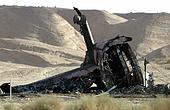
So, really, assigned seating, specifically on commercial airliners. Besides eliminating the ridiculously long lines that would appear in airports if people thought an earlier arrival would get them a better seat on the plane, it helps crash investigators determine why the plane crashed.
The so-called "human wreckage" is particularly important in investigating when the airplane tanks in the ocean, because the structural wreckage itself, along with the black box, may be particularly difficult to recover. Bodies, on the other hand, float.
If a passenger was in his or her assigned seat at the time of the crash, the location, type, and severity of injuries found on the body can be documented; when you perform this analysis on a group of bodies and place each one into its proper context, the assigned seating chart, you have a pattern.
Without going into what some people would find to be unnecessarily graphic detail, I will say simply that the various injuries found on recovered bodies and/or fragments, when analyzed to form such a pattern, are a fairly good indicator of the cause and ensuing events of the crash.
So remember - next time you fly, stick to your assigned seat; it might not affect your well-being in the long run, but if you crash it could help tell the world why.
--
Labels: engineering, travel
the City
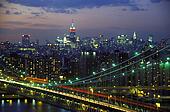
New York, of course: Empire City, the Big Apple, the City That Never Sleeps. You love it or you hate it, or you're like me: caught in the middle. I'm not a fan of the pollution and the perpetual rat race, but there's Fifth Avenue, Grand Central Station, the Met, Central Park. The Empire State building. Rockefeller Center. The
Rockettes. Broadway. The Macy's parade. The
Copacabana.
There's something about New York.
My family is from the east coast. One of my cousins was planning a road trip to New York over spring break last year, so we all e-mailed him some travel advice.
So for whoever wants to know, here's
What To Do In NYC.
Me:
I've heard the Metropolitan Museum of Art is pretty darn cool. You could try to get into a taping of Conan O'Brien or Dave Letterman. That would be nifty. But do what sounds like fun to you.
Grandpa:
First go to Little Italy to Ferrara's for Italian pastry, and a cup of coffee. Then take a slow walk to Chinatown, which is very close. Experience Chinese food, which should be very resonable. Take a walk to Wall Street, take a picture with the big bull.
Then take a subway ride to Times Square, see the show district, etc. See Rockeffeler Center, they should be ice skating there, it's just down the street from the Radio City theater. Take a walk on Fifth Avenue towards Central Park, experience the park. Don't be afraid to buy food from the vendors, it's a good experience. Notice I use that word a lot...
That will keep you busy for at least two days.
Grandma:
Yeah! Avoid roaming the streets alone, Washington Square (unless you need some drugs), and Central Park at night. The biggest thing to avoid is running out of money. Make sure you take A LOT with you. And keep some in your wallet and some in other places, like pockets, etc. That way if you get mugged you won't lose it all at one time.
Little Italy is OK, but you will have to pay about $6 for that pastry at Ferrara's. I don't know if prune danish is worth that much to you. Chinatown is really cool too.
All that Grandpa suggested sounds good to me. Also, NY is really expensive. You might find yourself paying $8 for a hamburger, though it will be really good and pretty large. Actually, the hot dog guys and other street vendors are a good source for food. Despite how disreputable they all look, the food is good.
I don't know how much money you guys will have, but there is a place called TKTS to get last minute tickets to Broadway shows.
Have a good time -- just walking around the city always fascinated me.
P.S. If you need the hookers, they've moved them from 42nd Street but just ask anyone in NY and they will either BE a hooker or be able to point you in the right direction. I also don't know how much they cost.
Aunt K.:
If you're looking for a good burger -- go to Jackson Hole. TKTS is in Times Square -- there's a website that's got all the information. Aida is great, so are Wicked and Hairspray.
You can get a hooker at any price point, but you'll get all the extras that go along with it -- eeeeeuwwwwwwww!
As far as getting mugged, don't look like a tourist and you should be fine. Know where you are going before you leave, don't use a map, walk with determination with fixed eyes ahead and (as horrible as this seems) ignore anyone who approaches you.
Good luck.
Aunt A.:
I advise you to wear sunglasses so that when people approach you and you need to ignore them, they can't see where you are looking, and also don't walk with your hands in your pockets, it makes you a prime target to be grabbed or pushed. I don't remember enough about NY to be able to recommend anything (except where to get good fabric, 39th & 40th Street), but everyone else's ideas sound good! It sounds like you will have a really fun time.
P.S. I'm not sure if I made this up or actually saw him do it, but I have a vague recollection of your uncle W. making subway or bus rides fun when he couldn't get a seat by not holding onto anything, but rather standing in a wide stance kung fu like crouch with arms up to balance himself. (Especially difficult around curves.) I didn't make that up, did I?
Uncle W. (my dad):
Nope, you didn't make it up. But the point is to NOT have your hands up for balance, but rather to keep a subtle athletic stance, hands down, and to shift your weight around the 360-degree circle to counterbalance external forces. If you get it wrong, you'll smash your face or lurch into someone. The odds of that happening are pretty good.
Having been a 20-something young male in NYC, let me say this: You are probably NOT anyone's main target of opportunity, unless you look unaware and do stupid things with your money/wallet. Especially if you're dressed down and with your buddies. My sisters, on the other hand, had a different problem.
Washington Square Park is a GREAT place during the day. Check out the characters in the public chess games in the SW(?) corner. Central Park is a busy city park at lunchtime, the south end.
If you go in during the morning from NJ, feel confident you can get a cheap breakfast in the city. Bagel vendors are everywhere during "go to work" time, and a bunch of restaurants will sell you "egg and cheese on a roll and a coffee" for cheap. You buy it, walk out, and eat.
NYC is one of those places that you won't have enough time to see everything. So I'd recommend those things unique to the city. Chinatown; I liked the David Letterman suggestion, if you watch him; Times Square; ABSOLUTELY the subway; bookfolk like the Strand; the cultured like Lincoln Center and the Metropolitan Museum of Art; patriot/immigrants like the Statue of Liberty; King Kong fans like the Empire State Building; shoppers like Fifth Avenue south of Central Park; young bankers like Wall Street and the NYSE; etc. etc. etc. I used to like walking through the flower district on Sixth(?) Avenue in the early morning. At rush hour, see how fast you can walk through the dense pedestrian traffic. It helps to imagine yourself a running back seeing a hole in the line opening up, and all you have to do is make the cut and go. Hey, it's all good.
Don't give money to bums; don't take photos of streetpeople peeing behind cars; things can get weird at night in just a block or two. Have a blast.
Aunt A. (a different one; my mom):
Everyone had good suggestions for NYC: Rockefeller Center is really cool any time of year, but the ice skating makes it even more fun, whether you skate or not. When I was working in Manhattan, they rented skates there pretty cheap. Chinatown, Wall Street, Empire State building, Washington Square with the chess games -- all great spots to visit in NY. K.'s suggestion about looking into street fairs is also really good. If you can find one, they are great to visit.
And if you want to talk about food... The grab-and-go breakfasts are great and cheap. I liked scrambled eggs on a hardroll -- you get the best hard rolls in NY. And the hot dogs and souvlaki and hot pretzels from vendors are all great. And how about trying a REAL bagel for a change -- NY is the place to get them.
I worked on Park Avenue right across the street from Grand Central station. Grand Central is a really neat building to walk through, and a major hub for several subway lines. They've got lots of food in there -- kind of like a food court in a mall -- and public restrooms. You may find that public restrooms can be hard to find, so it's good to have an idea where to go... like Grand Central, Penn Station, Port Authority, the Public Library. (I think that's the building with the cool lion statues out front. A scene from Ghost Busters was set there.) I used to walk on different routes to work from Port Authority (where the NJ buses come into) to Grand Central because each street has it's own character, interesting buildings, just a fun place to explore. I think Times Square and the Public Library were both along my route. And what W. says about trying to dodge your way through the rush hour pedestrian traffic -- all too true, and very entertaining in its own way.
I also liked walking through Greenwich Village.
And finally, my cousin's trip report:
New York was fun. We spent a couple days there. Also apparently I was the only one in the group who had been farther east than Ohio, so that was interesting. We stayed in North Bergen, NJ, and rode a shuttle bus from the hotel into the city every morning, and then back in the evening -- $5/person, not that bad a deal.
Time Square was interesting, but everything there was expensive... really expensive compared to 2-3 blocks away from Time Square. Grand Central station was interesting, we only spent a few minutes there. Our first day in the city, we just headed south from Times Square on foot and made it to Chinatown before we headed back up. One of the guys with us stopped in a record store in the Village, and found a couple records.
The next day we just did a lot of wandering around the city randomly. We saw a bunch of cool things though. We even rode the subway from Wall Street to the Bronx. (Freaked out the two guys I was with, but it was just a subway station, a little dirtier than Grand Central.)
Oh, I got yelled at on Wall Street for taking pictures. Apparently, a group of college age geeks taking pictures of buildings and street signs look like a bunch of terrorists (I did get a couple pictures before the police officer stopped me). You were allowed to take pictures of the NY Stock Exchange, but the guards armed with machine guns wearing riot gear kinda threw me off a little.
It was interesting, up near Times Square the street vendors were selling t-shirts and other souvenir stuff, but down in the financial district, they were selling silk ties, dress pants, dress shirts, shoes and other various professional things. I am actually kicking myself right now, because I should have purchased a $10 silk tie on Wall Street because they were actually quite nice looking.
We saw the World Trade Center. I got a couple pictures, but it really doesn't look like anything special now (ignoring the signs saying what it is). It just looked like a construction site; I would not have given it a second glance had it not been the World Trade Center.
We then rode the subway to right around Chinatown and Little Italy, and had dinner at a small restaurant in Little Italy. My tortellini alfredo was wonderful. It was a fun restraurant; there was a guy who played a keyboard and sang and everyone sang along. I forget the name of the place but it would probably be pretty easy to find again.
We then wandered in and out of import shops in Chinatown. And wandered through an open air fish market as the sun was setting. We then attempted to go to the Metropolitan Museum of Art, but by the time we got there, it was closed (who would have figured it would close in the evening!?). We then went to a wonderful Jewish deli/bakery on 83rd and I had a warm fresh bagel. We then rode a cab back to Times Square and just barely caught our shuttle back to the hotel.
The next day we tried to go up into the Empire State building, but there was a 3 hour wait that we did not want to deal with, so we went to the Metropolitan Museum of Art and spent several hours there. The Egyptian exhibit and the 19th century paintings were my favorites there. The modern art exhibit did not do too much for me, but there were one or two interesting things there. Some of the calligraphy from China and Japan was also quite cool.
When we left the museum, it was snowing. We popped through one of the edges of Central Park and then hit a coffee shop. The other two guys got some sort of weird sweet flavored coffee, and I got something normal. After this, I believe we headed back to Chinatown (one of the guys wanted a sword), and wandered in and out of more small shops. My friend never did get his sword (in retrospect it may have been a bad thing to wander around the city with a huge sword, but who knows.) Anyway, we were freezing (note the cold wet snow) and took a cab back to near Times Square and camped out in McDonald's for an hour or so, until we were close to the time when the shuttle would pick us up.
--
So there you have it -- what to do in New York City, on good authority. You heard it here.
--
Labels: travel